THE BATTLE OF 73 EASTING, THE BIGGEST TANK BATTLE SINCE WWII - FROM THE FRONT LINES
Posted by Spiritus Systems Guest, 1LT Tim Gauthier on Feb 26th 2026
There is a profound and distinct privilege in walking alongside those who have navigated the crucible of war. To know these heroes is to witness a courage that extends far beyond the battlefield; it’s found in the quiet bravery of their vulnerability as they choose to entrust us with their personal histories.
When they break their silence to share these memories, narratives often forged in fire and loss, they offer us a sacred gift, transforming the abstract concept of sacrifice into a visceral, human reality that demands our deepest respect and preservation.
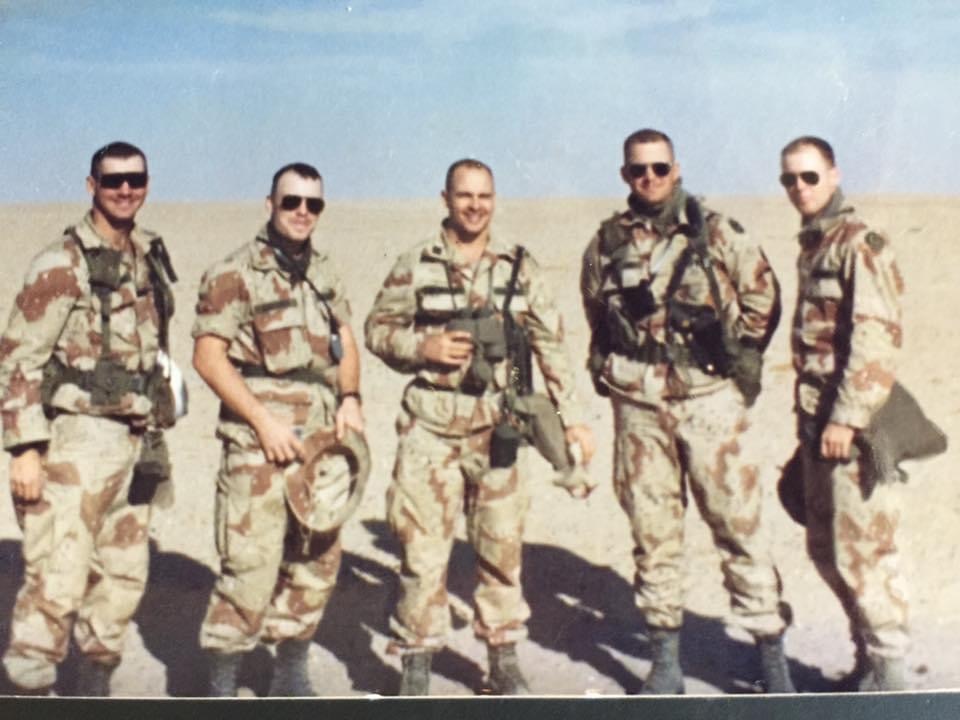
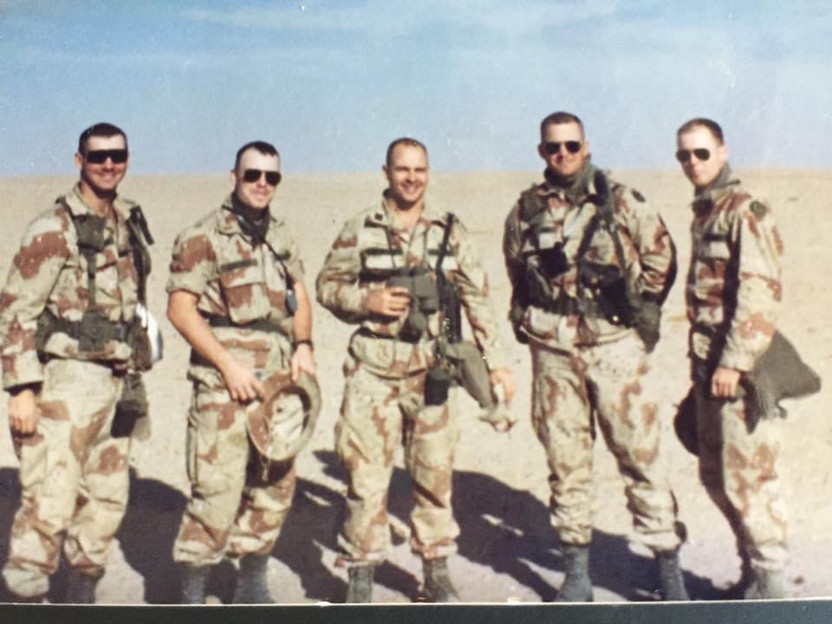
Today we honor the brave servicemembers who fought in what has been dubbed, “The Biggest Tank Battle Since WWII,” the Battle of 73 Easting.
We are honored to share the first-hand account of 1LT Tim Gauthier, from that day.
Note: The information and opinions contained in this account are based on the author’s individual experiences. They do not claim to represent the views, strategies, or opinions of Spiritus Systems or its management.
Eagle Blue ! 73 Easting Account 1LT Tim Gauthier
The Battle of the Seven Three Easting.
After three days of rapid advance through Iraq, with minimal contact with the enemy, the troop executed a difficult repositioning maneuver. Vacating our screen line to elements of the 3rd Armored Division. I think that this fact. And our increasing. enemy contact indicated that finally we would make significant contact.
Our repositioning was made even more difficult by the blowing sand, smoke, and gray cloud cover. This is no time to be losing anybody I thought as myself and the platoon sergeant attempted to spot the Blue 5 element who had occupied the northernmost observation post. We finally linked up with our Blue 5 element. And reestablished flank screen of the troop/squadron-oriented South, tying in with Iron Troop Wolfpack Squadron. Their platoon leader reported that they had had some action earlier that day.
I wished that my platoon had had the chance to do some fighting before this point. From the reports coming in over the troop net, it seemed that we had a significant enemy force. Not more than 15 kilometers to our direct front (east). While it may seem strange to say, I wish that we’d had some enemy contact earlier, my reason was that if we’d fought a smaller engagement over the previous days, the platoon would at least have some experience and not hesitate to shoot to kill. I had no doubt that my soldiers would do their job, but a moment’s hesitation would be fatal.
After a short refueling stop and repositioning under brownout conditions, we were finally given the order to advance! We began to move forward in fits and starts, a few kilometers then stop, another few kilometers and stop again. We didn’t know why we kept stopping, only that Regiment was controlling our movement. Hopefully they had a better idea of where the enemy main body was because we did not. Based on the last 12 hours activity I thought we were somewhere in the enemy’s security zone. I tried to answer the men’s questions, but I was pretty much in the dark myself.
By this point everyone was all wound up and frustrated with the start/stop movement. One minute we’re moving and the next we’re being told to halt and dig in. Are we attacking, defending, going into VII Corps reserve? It seemed nobody knew. Finally, Eagle 6 announced on the troop net that, “This is what we’ve been training and waiting for. We attack now!” It was such a relief the end all the waiting and we were finally going to take the fight to those assholes responsible for us being in this hell hole!
3rd Platoon’s critical task and purpose was to conduct a moving flank screen, oriented south and maintain contact with Iron Troop 3rd Squadron, to secure the troop/squadron’s MTC and allow the troop commander time and maneuver space to conduct our attack. This mission was made extremely difficult by the blowing sand which reduced visibility to under 100m at times. Even as we advanced from the 65 Easting, I Troop began to fall back on our south flank, but not yet so far that we lost contact. I was concerned because we’d not even made contact yet and they were falling behind! These concerns would prove to be well founded as the battle progressed.
We had advanced as far as the 68 Easting when we encountered a bunker complex vic PU68 00. Around 1550 SSG McReynolds (B 32) reported that he’d spotted 4 Iraqis attempting to surrender about 800m forward of the bunker complex. Acting on my orders, B 32 raced forward to secure the prisoners; SSG Mac dismounted with his JAFOs and quickly searched our new guests and threw them bodily up on the front slope of his Bradley. As I watched them pass enroute to dropping off the EPWs with the 1SG per SOP, I thought those four Iraqis were the happiest guys out there… as they were all smiles and waving as they passed.
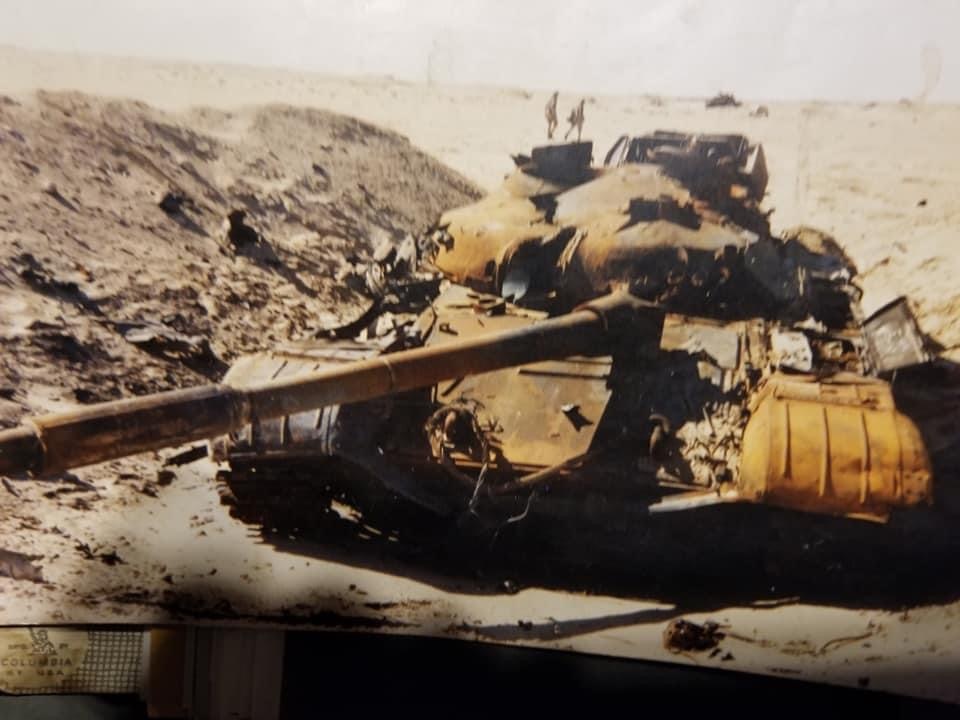
At that moment B33 (Sgt Maurice Harris) reported receiving heavy MG fire from the same bunker complex. He said, “Blue 1 this is Blue 3, I’m receiving fire!” The thought crossed my mind that the EPWs might have been a ruse to lure us within range of their guns. The “why” mattered little now. I responded with a platoon fire command not found in any manual, “Fucking kill them!” I fired into the center of the bunker complex to mark the target center of mass and orient the rest of the platoon’s fires while issuing a platoon fire command. That was all the prompting Third Platoon needed to unleash a deadly barrage of 25mm and TOW missile fire. It was as if someone had thrown a switch. In addition to the dug in troops we spotted multiple BMP-1s and MTLBs, as well as at least one ZSU-23-4 (which was immediately destroyed with a TOW missile).
My concerns about the platoon being unbloodied were unfounded as they methodically destroyed the enemy. I remember the crews covered each other with 25mm fires while their wingmen launched TOW missiles, exactly as we rehearsed hundreds of times. As for my own E31 crew, SGT Hovermale needed little help. As quickly as I could find targets with my binos he destroyed them. It was a team effort as our driver PFC Acosta navigated his way through the minefield while maintaining our place in the platoon formation and keeping our front slope oriented towards the threat. Red 1 had reported receiving ineffective artillery fire, but from my position the dark clouds of the air bursts seemed far away.
At the time the enemy fires were heavy but inaccurate. It was difficult to associate the flashing of their weapons with any specific threat to myself. That is until we rounded the corner of the bunker complex and a T-72 shortlined (shot low) us! It impacted only 15-20m in front of our track, throwing up rocks and dust. Before I could even issue a fire command, Sgt Hovermale was on the job, ordering the driver to stop so we could engage the tank with a TOW. If you’ve ever had to do this under fire, firing a TOW missile seems to take an eternity. You must stop, raise the TOW into firing position, fire and then track to missile all the way to the target. I know that time dilates under stress and this engagement seemed to take “the rest of our lives” as we often joked, but it took only seconds as my gunner smoothly destroyed the tank.
Our two scout observers, PFC Martin Lammey and SPC John Brown kept the guns fed with ammo and repeatedly exposed themselves to heavy enemy fire to reload our TOWs when the locking handle on the TOW load hatch broke. This maneuver required the two scouts to pass the missiles out through the back door and then one scout had to climb on top of the vehicle to dispose of the old casings and reload the TOWs. This was a time consuming and dangerous drill, requiring the Bradley to stop, turn its turret away from the enemy and max elevate the gun. It was a matter of trust and communication as we had to rely on our wingman in E35 (Sgt Willie Digbie) to cover us while we reloaded. The TOW access hatch handles broke on at least 4 of the 6 Bradleys, necessitating their crews to load their TOWs from the outside multiple times in the fight.
After sending my initial contact report to the Troop, I followed up with a more detailed report and recommendation that the Troop tanks execute an action right to attack the bunkers with tank fire. The tankers’ response was immediate and overwhelming as Eagle 6 led the tanks online and destroyed the bunker complex and vehicles with 120mm main gun rounds. That quieted the Iraqis and those still alive went to ground and played possum as we bypassed the bunkers, hosing them down with generous amounts of 25mm cannon and MG fire. By now the tanks had reoriented themselves east, behind 1st Platoon Scouts (Red).
Just as the tanks reoriented, we heard a spot report of T-72s from 1st PLT scouts’ northernmost section (SSG Lawrence and SSG Magee). At this point there was confusion as Red 1 (Mile Petschek) was trying to where the T-72s that SSG Lawrence had identified were located. The problem was Red was talking over the troop net instead of their platoon net, an easy mistake to make with two microphones that look exactly alike.
Based on Red’s contact Eagle 6 ordered the Troop to go “Tanks Lead” which meant the two tank platoons echeloned on each side of Eagle 6 and pass forward of the First Platoon scouts .Our Platoon mission remained unchanged… continue to screen the Troop’s southern flank and maintain contact with Iron Troop. As we continued the attack first SE, the East, the NE we were running the seam between two different divisions. To the East and North the enemy was equipped with T-72s and BMP 1s, while further south there were T-55s and MTLBs. It seemed the road that ran through the bunker complex was the unit boundary. The enemy commander was smart because he had chosen a reverse slope defense to negate our superior range and firepower. His mistake was assuming that that we could not navigate in the desert except to handrail this road. Well, he was wrong, and we hit his defenses at an oblique, or 20 to 30 degrees offset from the road. This meant that most of his tanks had to back out of their holes to engage us. This proved deadly as we were inside their decision loop and killing them as faster than they could react.
The speed and ferocity of the Troop’s attack not only overwhelmed the Iraqi defenders but left our adjacent units behind. Iron Troop fell further and further behind, short of the 68 Easting. We would not see them again until later that evening. Repeated attempts to reach them on their internal frequencies proved fruitless.
The Platoon continued to screen the southern flank as Eagle tore through the enemy main line of defense, wiping them out as well as the battalions in depth. The coup de grace was attacking the Iraqi brigade reserve of 17 tanks stilled stationary in their coil. Even as we attacked far past our limit of advance, we continued to destroy all manner of tanks, PCs, ZSU-23-4s, trucks, and hundreds of infantry. We were simultaneously engaging vehicles to our south (later identified as 12th AR BDE) and killing infantry close in… many of Iraqis were laying low until we’d passed and then they’d jump up to try to shoot us from the rear with RPGs and kill vehicle commanders with small arms fire. These engagements were happening across the troop, while the tanks killed the remainder of the tanks in zone and beyond, the scouts were driving over bunkers, driving over people, shooting Iraqis at very close range with pistols and M-16s while generously tossing hand grenades into enemy fighting positions. The troop command post and trains kept themselves tucked in the protective box formed by the scouts and tanks as they followed the tracks through the enemy minefield. They were afraid of the mines and rightly so, as they were driving HMMWVs and trucks which had no armor protection.
Our track escaped a second close call as another tank drew a bead on us just as Sgt Hovermale hurriedly stopped the track to raise the TOW. It couldn’t be more than 400 meters away. Time seemed to stand still as I saw the flash of their main gun and saw the round impact immediately under our track, covering me yet again with dirt. I shouted the fire command, but Sgt Hovermale had just announced “On the way!” as he fired and coolly destroyed the tank, ripping off its turret in a ball of fire as the ammunition cooked off…. The turret seemed to slowly spin, suspended in the air before crashing to the ground next to the destroyed tank. We had no time to celebrate our escape as we continued the attack.
We finally reached the destroyed enemy reserve that sat on an almost imperceptible rise that dominated our Troop zone and beyond. Upon reaching our new battle position I asked for a Blue 1 report… accounting for all personnel, weapons, and vehicles. After the fight we were in there was no time or bandwidth to take a headcount. You can’t imagine my relief when each Bradley crew reported in sequence and we’d suffered zero casualties. These same reports were now happening across the Troop… again, not a single casualty! I really can’t describe the emotions I felt on hearing we were 100% across the board. I offered a silent prayer of thanks and set about organizing our 360-degree defense of the high ground just short of the 74 Easting.
The fight was far from over. Even as myself and my platoon sergeant SSG Dave Caudill (E34) left the position and backtracked to find a reported enemy mortar position, 1st Platoon scouts headed north to link up with Ghost Troop to our northwest. The Troop got on with our priorities of work while the mortars finally got into the act, destroying vehicles and positions beyond direct fire range. These missions would go on all night as every artillery unit got in on the destruction… mortars, 155mm, and even MLRS, destroying enemy ammo and supply dumps throughout the evening. Between the outgoing rockets and the huge secondary explosions, the night sky was alight with fire.
Our search for the reported mortar position proved fruitless. With daylight fading into a gray sky made even darker by the countless burning vehicles, we weren’t going to find that mortar unless we stumbled right on top of it! As we returned to our BP I could see that SSG McReynolds was on the job, positioning our Bradleys, establishing fields of fire, and tying in to our sister platoons. The Platoon covered from 3 to 6 o’clock in our direction of travel, which in this case was East. We were positioned facing from 180 degrees south to 270 degrees west with some minor variations as the other platoons pulled a vehicle out here and there to go off on some tasks.
Satisfied that the NCOs had the organization and consolidation priorities working, I turned my thoughts again to Iron Troop. Darkness was falling and the I Troop was still kilometers behind, creating a huge gap between units. We were very vulnerable to an enemy counterattack. After multiple attempts to talk to either their Troop CP or the northmost platoon we gave up. As near as we could tell they were in contact… back at the bunker complex. Where we had started. I’m not sure what they were shooting at unless it was in the southmost area of their troop zone as we’d attacked through there less than an hour before. What concerned us is that by engaging the bunker complex from their self-reported position, they were firing towards us. Based on reports on their internal troop frequency, they’d already lost a Bradley. This vehicle loss was later to be determined as fratricide.
After talking to Eagle 6 about our issues with I Troop fires and not being able to communicate with them, I recommended that we don’t try to approach them in the dark without going all the way back to the squadron trains, crossing into 3rd Squadrons AO, and approaching the troop from behind. We rejected that approach as being to time consuming. HR then told me to let him get the I Troop commander on the radio as they’d been West Point classmates. Sure enough, Eagle 6 was able to talk to Iron 6.In the meantime I’d did some back deck geometry using our positions to establish a Restricted Fire Line (RFL), a control measure to limit adjacent forces movement and fires. It establishes a line beyond you cannot fire. Due to the lack terrain or any other features we used magnetic azimuths. This control measure was very necessary as Iraqi units followed a natural line of drift between our troops. They could not see us in the dark as they blundered into our Troop and were destroyed.
As night fell completely and having only occasional enemy contact, the artillery fight became our main effort, as LT Dan Davis and his Fire Support Team (FiST) identified and engaged enemy units and fighting positions, but templated enemy artillery positions and logistics sites. At this point we began to give enemy soldiers the opportunity to surrender and were only shooting enemy observed in a hostile act. We had a few takers until we brought the PSYOPs team forward and our Kuwaiti terp began broadcasting surrender appeals. The few prisoners quickly grew to a flood as Iraqi soldiers realized that we were not going to murder them. I was proud of our troopers as they humanely processed our prisoners under the leadership of Sgt Schoonmaker. We had been trying to kill them not hours before and were now treating their wounds and sharing what little water and food we had. This led to some overwhelming shows of gratitude, people groveling in the dirt and trying kiss our shoes. They had been told that they would be murdered if they surrendered and clearly believed it.
At some point that night we received a FRAGO to conduct a Forward Passage of Lines with 1st ID sometime around 2400(ish). We immediately set to work coordinating with our higher HQ and the passing unit, marking the lanes and coordination points, marking friendly positions, and the other endless actions to conduct a nighttime FPOL with a unit we’d never worked with. This was graduate level work, complex and fraught with the danger that small mistakes can grow exponentially and end up with units intermixed and fratricide. I’m pretty sure we’d expended our basic load of chemlites to mark our positions. With the nighttime weather clear we watched as the Apaches went forward to hunt tanks on 1st IDs objectives. Meanwhile, 1SG Virrill had brought forward our resupply of fuel, ammunition, and some water. Usually when the support platoon guys just drop the side panel on the truck and tell our troopers to come get their own ammo. But they were a very motivated crew seeing the fires and continuous exchanges of gunfire. You could see the whites of their eyes in the dark. Tonight, they moved with great alacrity and vigor, setting new records in resupplying the Troop. Their second surprise was non-standard evacuation of prisoners on the return trip.
As the forward passage time approached, we went to REDCON 1 while the fire support team coordinated with the Squadron FDC to shift and ultimately hand off fires to the passing unit. Finally, the lead scouts and tanks of 1st ID came through the lane and promptly opened with everything they had. Not sure what they were shooting at as there was nothing but dead vehicles, but they look alive in your thermal sights at night and better safe than sorry. We watched the passage of the entire division through the Regiment ( I think there were 2-3 lanes overall), it took hours, and it was a mighty impressive sight. Exhausted from being up for 4 days and the adrenaline dump, we napped as best we could.
The next day on the 27th the scouts worked to clear bunkers and round up any stray Iraqis. SSG McReynolds(E32) and SSG Caudill (E34) led our effort. Before we left, we reinforced the fact that we’d made it this far without injury, don’t get stupid playing around in bunkers looking for souvenirs. But soldiers being soldiers these keepsakes kept showing up somehow and soon everyone in the platoon had a beret and AK-47. We also talked about not taking pictures of the dead and wounded… things you don’t need stuck in your memory bank for the rest of your life. They were soldiers who had done their duty and should be treated as such. I was very proud of our troopers who were able to go from fighting to handling the Iraqi EPWs with humanity and dignity. I looked around the battlefield as we moved about in and amongst the dead and shattered vehicles, in awe of the destruction. It looked like Armageddon with the fires, the choking smoke, and the smells of burnt metal and human flesh. You could not escape it, and you can never forget it.
Later that day we conducted a Troop AAR because we had no idea if we’d be back in the fight. And while we had won decisively, there were still things to improve on. We had visitors as first GEN Franks (back slaps and coins all around), and some journalists (to include Rick Atkinson). For whatever reason they decided to come visit us that day, to see the battlefield and the soldiers. I think that immediate spotlight was the reason that the 73 Easting fight became semi famous and studied at the maneuver officers career course. I’m certain there are units that fought with distinction and killed large swathes of the Republican Guard. I believe that we were the only unit to fight outnumbered and continued the attack rather than backing off. Speed, Firepower, and the Shock Effect of an ACR in the attack, coupled with the skill and courage of the cavalry troopers carried the day.